Translator Line: Bridging Cultural Gaps in the Workplace Effectively
Introduction: The Reality of Cultural Gaps in Modern Workplaces 🌏
What are cultural gaps and why do they matter?
In today's global workforce, cultural gaps have become an everyday reality. Teams often consist of members from diverse countries, each bringing their own languages, communication styles, and workplace norms. These differences, while enriching, can create misunderstandings, hinder collaboration, and even pose risks to safety and productivity.
A cultural gap refers to the disconnects that arise when individuals interpret ideas and actions differently due to varying cultural backgrounds. In the workplace, these gaps can manifest as miscommunication, mistrust, or workflow disruption.
Addressing cultural gaps is essential for maintaining harmony, efficiency, and safety in today’s multinational workplaces.
The rising need for cross-cultural collaboration
Industries such as agriculture, manufacturing, construction, caregiving, hospitality, and food services in Taiwan and worldwide rely heavily on foreign workers from Vietnam, Indonesia, Thailand, and beyond. These workers bring valuable skills but often face language and cultural barriers that complicate everyday tasks ranging from shift scheduling to safety training.
The rising diversity necessitates collaborative tools and strategies that support multilingual communication and cultural understanding among diverse teams.
Brief: How a translator line can help
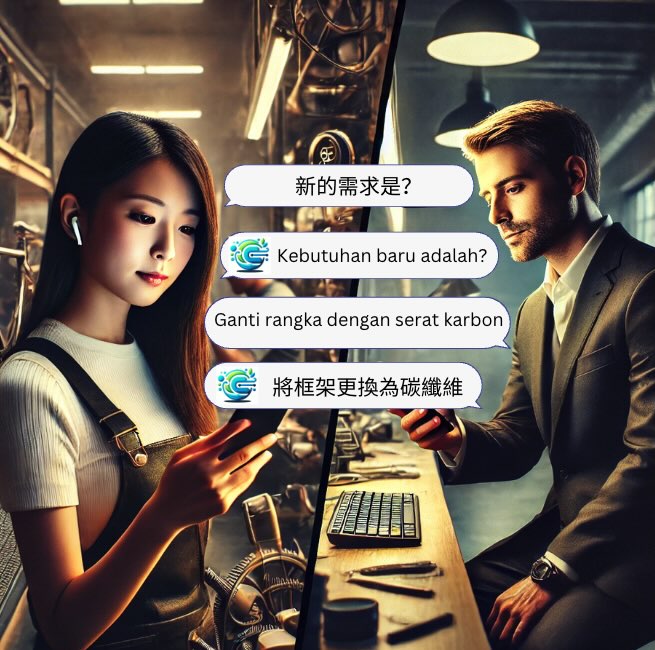
A translator line is an AI-powered multilingual chatbot embedded directly within messaging platforms like LINE. It enables instant, seamless translation of text and voice messages in multiple languages, bridging communication gaps without requiring users to switch apps or hire interpreters.
Echonora exemplifies this technology, supporting Mandarin, Vietnamese, Indonesian, Thai, and English, and allowing entire teams to communicate clearly in real time.
Understanding Cultural Gaps: Types and Impact ⚡
Common areas of cultural miscommunication (language, hierarchy, time, feedback)
Cultural misunderstandings typically occur around:
- Language: Variations in vocabulary, idioms, and proficiency can cause confusion.
- Hierarchy: Different cultures’ views on authority may affect communication openness.
- Time Perception: Cultural attitudes toward punctuality and deadlines vary significantly.
- Feedback Styles: Some cultures value direct criticism, others prefer a more indirect approach.
Recognizing and adapting to these differences prevents misinterpretation and builds team cohesion.
Case studies: Workplace incidents caused by cultural misunderstanding
For instance, a manufacturing company employing foreign workers encountered near-miss accidents due to unclear safety instructions caused by language gaps. Similarly, a hotel faced operational delays due to miscommunication between multilingual housekeeping teams and supervisors regarding shift allocations and cleaning standards.
These situations demonstrate how cultural gaps, left unaddressed, lead to compromised safety and reduced productivity.
The hidden costs: productivity, morale, and safety
Beyond operational impact, unaddressed cultural gaps contribute to higher staff turnover, workplace tension, and increased accident rates. The cumulative hidden costs affect company reputation, financial health, and employee wellbeing.
Communication Barriers: Language as the Main Culprit 🗣️
Language diversity in today’s organizations
In global organizations, multilingual teams co-exist daily. In the hospitality industry, for example, front desk staff, housekeeping, maintenance, and security personnel may communicate in Mandarin, Vietnamese, Indonesian, Thai, or English.
This diversity can complicate accurate message delivery, especially during critical moments such as shift handovers or incident reporting.
Real-life examples: The challenge of shift handovers and incident reporting
Shift handovers are known bottlenecks for errors due to language barriers. A case study by Echonora highlights how miscommunication previously caused confused work assignments and overlooked maintenance issues, leading to delays and safety risks.
For example, a cleaning staff member might report a faulty air conditioner in Vietnamese, but without timely translation, the problem remains unaddressed affecting guest comfort and safety.
Limitations of traditional translation methods
Common practices such as relying on bilingual employees or outsourced interpreters are costly, slow, and often unavailable instantly. Paper-based communications or stand-alone translation apps disrupt workflows, reducing efficiency.
Integrated, real-time translator lines embedded in daily communication tools eliminate these limitations.
How Technology Bridges the Divide: The Translator Line Solution 🤖
Introduction to the translator line concept
A translator line is an AI-powered, group translation chatbot integrated into the LINE app that supports multiple languages simultaneously. Echonora offers this innovative solution tailored for multilingual workplaces, enabling real-time communication among team members.
How real-time chatbot translation works in teams
The chatbot automatically detects the language of incoming text or voice messages and translates them instantly into each user’s preferred language. Communication stays seamless, with no app switching required.
For full setup, visit Echonora’s collaboration settings and consult the official LINE Help Center.
Key features that support multicultural workplaces
- ✅ Real-time translation of Mandarin, Vietnamese, Indonesian, Thai, and English
- 📱 Operates fully inside LINE—no extra app needed
- 💰 One subscription covers all group members for cost efficiency
- ⏱ Translates both text and voice messages smoothly
- 🔒 Ensures secure communication with broad device support
More on supported languages is available at Echonora’s language guide.
Benefits: speed, accessibility, cost, and inclusivity
Translator lines drastically reduce delays caused by language barriers, foster inclusivity by letting everyone participate in their native language, and cut translation expenses. This improves real-time decision making, aids compliance with safety protocols, and builds trust within diverse teams.
Practical Strategies for Bridging Cultural Gaps 🚀
Encouraging openness and cross-cultural awareness
Creating a culture of openness where team members freely share cultural nuances reduces misunderstanding. Regular cross-cultural workshops and storytelling sessions foster empathy.
Managers can initiate monthly cultural exchange meetings, encouraging mutual respect and awareness.
Training and onboarding best practices
Effective onboarding blends translator lines, visual cues, and mentorship. As recommended by Argotrans, combining technology with human support accelerates language adaptation and safety compliance.
Leveraging translator lines to support daily workflows and safety
Use translator lines to communicate shift changes, safety alerts, equipment status updates, and training materials in real time. For example, maintenance teams can instantly report hazards or equipment breakdowns in their native language, with supervisors immediately receiving translations to act promptly.
Visual aids, clear instructions, and positive reinforcement
Complement messages with images, infographics, and videos to reinforce understanding. Use culturally sensitive positive reinforcement techniques to motivate and engage teams.
Real-World Success Stories: Multilingual Teams in Action 🌟
Hospitality and hotel operations
Hotels employing multilingual staff have embraced translator lines to bridge communication gaps. According to HospitalityNet, deploying language technology boosts operational efficiency and guest satisfaction.
Echonora case studies highlight how front desk, housekeeping, and food & beverage teams coordinate seamlessly despite language diversity.
Manufacturing, caregiving, and construction sectors: before and after the translator line
Before translator lines, manufacturing plants faced missed safety briefings and incomplete procedures among foreign workers. Caregiving agencies struggled with family communication, causing stress and errors. Construction sites reported delays due to unclear instructions.
After integrating translator lines, comprehension improved drastically, safety incidents decreased, and team morale rose.
Testimonials from managers and staff
"Echonora’s translator line transformed how our team communicates. Shift handovers are clearer, safety alerts reach everyone instantly, and foreign staff feel truly included." – Operations Manager, Taiwan
"This tool acts like our personal interpreter 24/7, making work less stressful and much more efficient." – Housekeeping Supervisor
Guidance for Choosing & Implementing a Translator Line 🛠️
Key factors to consider
Look for solutions offering seamless integration with your communication platform, broad language coverage relevant to your team, intuitive interfaces, and transparent, affordable pricing. Echonora meets these needs with subscriptions covering entire groups for cost savings.
Step-by-step setup with LINE
Create a LINE group for your team, then follow detailed instructions in Echonora’s user guide. Customize language settings to match individual preferences, enabling instant translation for all users.
Ongoing support, continuous improvement, and measuring results
Solicit regular feedback from users and monitor key metrics such as message accuracy, the frequency of communication errors, and safety incident rates. Use these insights to fine-tune settings and workflows. Support is available via Echonora and the official LINE Help Center.
Overcoming Common Challenges & Maximizing ROI 💡
Addressing resistance to new tech and cultural change
Adoption can be boosted by demonstrating tangible benefits, providing hands-on training, and involving trusted team leaders as ambassadors. Sensitivity to cultural concerns when introducing new technology ensures smoother transitions.
Tips for scaling translation lines across teams and locations
Standardize translator line usage policies while adapting language support to regional needs. Share success stories and best practices organization-wide to encourage adoption.
Monitoring effectiveness: KPIs and user satisfaction
Track communication accuracy, efficiency improvements, and user satisfaction through surveys and incident reporting metrics. Regular reviews help quantify ROI and guide continuous improvement.
How to access further support
Resources include Echonora’s support portal, the LINE Help Center, user forums, and scheduled training webinars.
Further Reading:LINE Translation Bot Guide: Compare Tools and Set Up in Minutes
Further Reading:LINE Translator for Teams: Workplace Guide
Conclusion: Building a More Inclusive, Productive Workplace Together 🤝
Recap of the cultural gap challenge in modern teams
Cultural and language gaps are inherent in today's diverse workplaces, affecting communication, safety, and productivity if left unaddressed.
The future of inclusive workplaces powered by technology
Tech solutions like AI-driven translator lines such as Echonora enable instant multilingual communication, fostering inclusion, safety, and workforce harmony.
Call to action: Try a translator line to unify your global team
Experience how a translator line can transform your workplace by simplifying communication and enhancing collaboration across cultures. Visit Echonora today to learn more and start bridging the gap.
Try Echonora and break the language barrier
180+ languages, real-time text and voice translation in your LINE group chats.
Add on LINE →